 The men, women and children both young and old daily troop to Kenya from all corners of Uganda. They cross the border on foot, motorbikes, bicycles, private cars and ambulances their destination – Kenyan hospitals.
The most favoured are those in Busia County both private and public and especially in Busia and Malaba towns on the Kenya – Uganda border. The main reason being the towns’ proximity to patients’ homes in various parts of Uganda particularly for those seeking medical services.
The medical facilities in the neighbouring Bungoma County are also not spared since that town is only a few kilometres from the Kenya-Uganda border with a major highway running through it with connections to Uganda’s Tororo, Mbale, Soroti, Moroto, Kapchorwa areas among others.
Investigations by this writer established that most of these patients troop into Kenya from not only Busia district of Uganda, but also Bugitri, Busoga, Majanji, Iganga, Palisa, Kumi, Kapchorwa, Mayunge, Kotido, Moroto districts among others.
Many patients we talked during the investigations confirmed that they had travelled as far as from these areas in Uganda to seek medical services from the Kenyan medical institutions because in Uganda they were scarce.
That this has been the practice for decades and there appears to be no end in sight in the immediate foreseeable future. That points to an ever increasing flow of those seeking medical attention in Kenya from Uganda as the populations continue increasing every expiring year.
It is also true that apart from their numerousness, the medical institutions in Kenya are more advanced and equipped with medical supplies, technology, equipment, medical amenities and personnel compared to the few available in our neighbouring country.
They also established that the most critical issue here is the fact that Kenya has more medical facilities both private and public hospitals compared to Uganda. Whereas in Kenya public health facilities can be found right from locational, divisional, district, county and former provincial levels, in Uganda the situation is not the same.
At the same time comparatively, whereas in Kenya there are many private especially mission or church (Faith Based Organizations), group, commercial organizations and individual owned hospitals, the reverse situation is prevailing in Uganda forcing many nationals of that country to seek medical attention in Kenya.
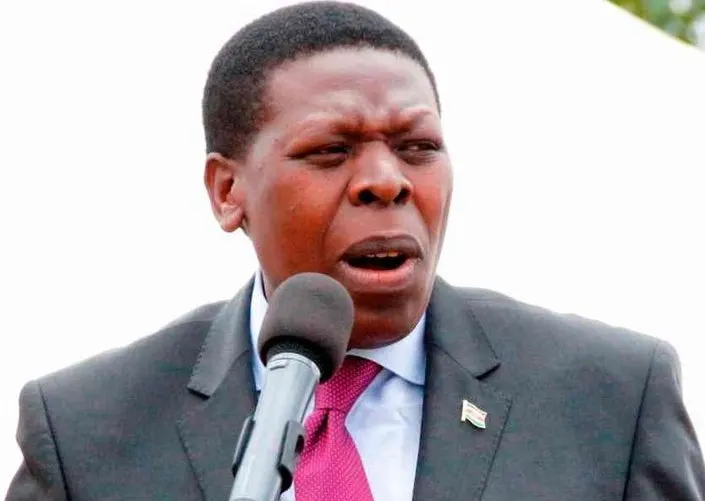
According to the Busia County government Cabinet Executive for health Maurice Siminyu on a daily basis an average of about 100 Ugandans cross the border into Kenya to seek for medical services in Busia County alone adding that the County Government started documenting the patients flow from Uganda to have proper and accurate statistics.
Dr. Siminyu says: “The numbers may go higher or lower depending on the disease incidence occurring in that country. If there is any major disease outbreak in Uganda our health facilities will definitely be under extreme pressure, because we play a big role in providing health services for our neighbours.”
He says in Busia County alone, the most targeted hospital is the County Level 4 Hospital that was formerly the Busia District Hospital serving the entire larger Busia district before it was fragmented that is now Busia County.
The County Health Executive says that Ugandans are charged an average of at least 50 per cent above the charges levied Kenyans since they are not nationals and they are easily identified since they cannot produce Kenyan national identity cards.
“There are other sub-county hospitals which are also visited by Ugandans especially if they are suffering from common minor ailments like Kocholia Sub-County Hospital, Sio Port Sub-County Hospital, Alupe Sub-County Hospital, Nambale Sub-County Hospital, Khunyangu Sub-County Hospital, Bumala “B” Sub-County Hospital and Port Victoria Sub-County Hospital,” he said.
Most of these facilities were established in the 1970s by the post-independence government starting merely as Health Centres, but over the years most have developed into either fully fledged public hospitals or sub-hospitals and still growing.
Most ordinary Ugandan patients seeking medical attention in Kenya prefer going to the public health institutions over the private ones because of the cost implications involved. Though they pay higher medical fees compared to their Kenyan counterparts for being foreign nationals in public hospitals, it’s cheaper that those they have to pay in private ones though fixed for everybody.
The charges also depend on the ailments diagnosed and the prescriptions of drugs required for treatment. That also includes admissions for in-patients and the duration of their stay with Ugandans paying higher rates than their Kenyan counterparts.
There are other private popular medical institutions like the St. Elizabeth Hospital in Funyula Sub-County, Tanaka Maternity and Nursing Home in Busia town, PESI Medical Centre, Bulanda Maternity and Nursing Home.
Dr Siminyu says that most patients trooping to Kenya from Uganda to seek medical treatment are usually suffering from common ailments like malaria, water borne diseases, orthopaedic casualties, and infectious diseases, amongst many others.
He says the services they seek start from diagnostic, laboratory, treatment, access to a wide range of medicine or drugs, theatre operations, among many others.
In Uganda there is only one private hospital in Busia district called Red Cross in Busia town operated by the Uganda Red Cross which does not have the capacity to handle many in and out patients.
As a matter of fact most critical cases going there for treatment beyond its capacity are rushed by Red Cross ambulance to the Kenyan hospitals – particularly the Busia County Level 4 Hospital with higher capacities among others.
This facility is less than an average Health Centre on the Kenyan side and does not have the capacity to handle many patients both resident and non-resident at the facility, yet it is expected to serve a very huge area of the Eastern parts of Uganda.
Otherwise all the neighbouring districts and counties do not have hospitals either private or public like in Kenya. Tororo town about 25 kilometres from Busia town in Uganda is the only one which is reputed to have a hospital specialising in eye care.
Indeed many Kenyans from both Busia and Bungoma counties including neighbouring ones like Siaya troop there for eye treatment instead of travelling over long distances of more than 100 kms to St. Elizabeth’s Mission Hospital Mukumu in Kakamega County to seek eye treatment.
According to the Resident Commissioner Busia district Uganda Mr. John Katerega comparatively successive governments in his country since its independence have not invested heavily in that country’s health sector.
Mr Katerega says: “Right from independence we did not have an elaborate public or private health development plan like Kenya. One that spread all the way from the national level to grassroots administrative and geographical units.”
He says the country has one major national hospital called Mulago based in the capital city Kampala, but virtually all other major administrative and geographical regions like Jinja, Mbale, Soroti, Gulu, Mbarara, Tororo among others did not major health facilities like Kisumu, Kakamega, Eldoret, Nakuru, Mombasa among others in Kenya.
The Resident District Commissioner says that although his country’s government many development programmes to develop its health sector, Kenya was way ahead and plays a major role in providing medical services to its nationals.
Our investigations also established that another area that is still wanting in Uganda is that of provision of mortuary services for the deceased forcing many Ugandans either to use mortuaries on the Kenyan side or rush to bury their dead.
In Busia town alone which spans across the border between Kenya and Uganda there is no single mortuary on the Ugandan side whereas on the Kenyan side there are two – one at the County Level 4 Hospital and the other at the privately owned Tanaka Maternity and Nursing Home.