
 It was systematic, persistent, and pervasive with deadly results to the once thriving multi-million shillings cotton industry. To date the consequences of these activities four decades ago are still being felt in the country’s economy.
The government and stakeholders, both local and international have for more than ten years been trying to revive the once highly vibrant cotton farming industry but across the country the cotton ginneries and textile factories remain dead – No cotton.
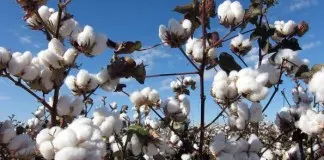
Indeed tens of thousands of Kenyans have never heard of the country’s cotton industry, or if they have, only read or been told stories about it but never seen a plant or picture of the cotton crop and that it once was one of the major cash crops in the country.
Serious efforts to start reviving production of the crop started as early as the year 2000, but do date there is virtually nothing to show, yet the seasonal crop in most parts of the country can be produced twice in a year during the long and short rains seasons.
For the last ten years the government and stakeholders both local and international have been on an aggressive campaign to revive growing of the crop that was a major economic backbone of many regions in the country, but much more needs to be done to have the desired results.
It goes without saying that the government went a step further to ensure the establishment of the Cotton Development Authority (CODA). It was set up to co-ordinate the rehabilitation of the sector in all corners of the country right from the national level.
Indeed it its vision 2030 development plan, the government benchmarks the revival and thriving of this sub-sector as one of the key drivers in achieving the goals of that government economic development blue print plan.
According to the minister for devolution under which the Directorate of Economic Planning falls Festus Mwangi Kiunjuri: “The country’s cotton industry is expected to be one of the leading pillars of the country’s development blue print popularly known as Vision 2030.”
He says the government is committed to invest millions of shillings in the revival of the industry and plans were at an advanced stage to import high quality Cotton seed from Israel to supply to the farmers to produce higher quality yields including the introduction GM Cotton after proper legislation to comply with the necessary requirements.
The government in collaboration with its Israeli counterpart has plans at an advanced stage to import high yield seeds from that country’s Hazera Genetics through Amiran Kenya Limited.
At the moment and for decades farmers have been using KSA 81M and HART 89M commercial varieties available whose potential cotton yields are estimated at 2500 hectares under rain fed cottons and 3500- 400kg/ha under irrigation.
So far that government has confirmed that currently only 10.04% of total land, 384,500 ha is under production of the cotton crop in the revival programme with only 40,000 farmers farming the crop. Cotton farmers are currently producing about 30,000 bales against 368,000 bales of lint.
According to the Fibre Crops Directorate interim Chief Executive Officer Anthony Muriithi the farmers are growing the crop are currently getting an average of Kshs. 46 per Kg of the crop sol to the buyers.
Mr. Muriithi says: “Indeed it is sad that we have to buy this raw material from outside to service our textile factories that require it, even seed cake to feed our animals and soap production activities when we can do it ourselves.”
He says that despite the challenges, the country still exports textile products, locally produced with imported raw materials. “For example last year, we exported textiles worth over Kshs. 22 billion mainly from Export Processing Zones (EPZ) to the USA under the African Growth Opportunity Act in 2016,” added Mr. Muriithi.
The Africa Growth and Opportunity Act (AGOA) agreement gave Kenyan cotton growers direct lifeline to grow the crop, produce textile products locally and export them direct to the United States, but unfortunately this has not played any major role in stirring the industry back to life.
According to statistics from the ministry of agriculture, cotton production in the country was highest in 1984 when 70, 000 bales of cotton lint were recorded. In 1970s and 1980s when cotton farming was second in the country in terms of employment after public service, Bura used to produce 30 percent of the national production followed by Meru region.
The immediate former Agriculture Cabinet Secretary Willy Bett encouraged farmers to venture into cotton farming as the government is keen on reviving the industry that was at the coast where a Titanium mining firm is heavily involved in revival programmes with local farmers.
Mr. Bett is on record saying: “We have put up mechanisms to revive the cotton industry and our emphasis has been on enhancing strong relations with key stakeholders to boost self-regulation and promote not only production but also value and consumption of cotton.”
The immediate former CS further says the government is aware of opportunities and challenges facing the cotton sector and is keen to mobilize resources to ensure that the sector is back on its feet.
Bett said just before his departure: “We want to ensure that opportunities in the cotton textile value chain are enhanced through access to credit and encourage the formation of cooperatives and implementation of appropriate polices to support the sector.”
According to the Cotton Development Authority, Currently, there are only five operational ginneries in the country located in Makueni, Kitui, Meru, Mpeketoni and Salawa out of an establishment of 22 ginneries.
The authority reports that the revival efforts were no longer lone ranger efforts by the government and stakeholders in the country alone, but there were also international partners from USA, Brazil, India, Turkey and China who have expressed interest in investing in the industry.
The consequences of the virtual total collapse of the once vibrant industry reverberated across the country b from the mid-1970s to the mid-1980s and eventually saw the total collapse of the once booming multi-million shillings textile industry right from the border with Kenya and Uganda to Mombasa on the Indian Ocean.
The giant factories that ground to a halt as a consequence include the Kisumu Cotton Mills (KICOMI) in former Nyanza province, Raymonds and Rivatex in the former Rift Valley province, Thika Textile Mills in Central, many private textile factories in Nairobi and Mombasa in the former Coast province.
They ground to a halt mainly because they had been acutely starved of the raw materials they desperately needed to keep afloat, although there were also other factors like the rampant proliferation of cheap products made from synthetic fiber all over the world took a stranglehold of the textile market.
The country’s leading cotton producing regions right from the colonial days through the 1960s, 1970s and eventual total collapse in the 1980s were the former provinces of Nyanza, Western, Rift Valley, Eastern, and Coast. They were also home to thousands of ginneries that were used to gin the raw crop, after which it was graded and bound in heavy cotton bales destined for the textile mills.
Practically all these ginneries were owned and operated by Cotton Farmers Cooperative Unions and Societies whose officials started systematically failing to remit to the farmers their dues for the crop delivered including other malpractices.
This started running into years of accumulated un-paid farmers dues running into hundreds of millions of shillings consequently forcing the farmers to abandon growing the crop altogether to venture into farming other crops with immediate returns.
The once vibrant cotton storage stores at hundreds of locations scattered all over the growing areas closed down and started rotting as ginneries also ground to a halt and never to breathe life for decades to date.
The truth was that farmers could not produce enough cotton for the industries as their cooperative societies also became weak due to the stiff competition of textile products – synthetic fibre and second hand clothes imports hammering the finale nail in the industry’s coffin.